
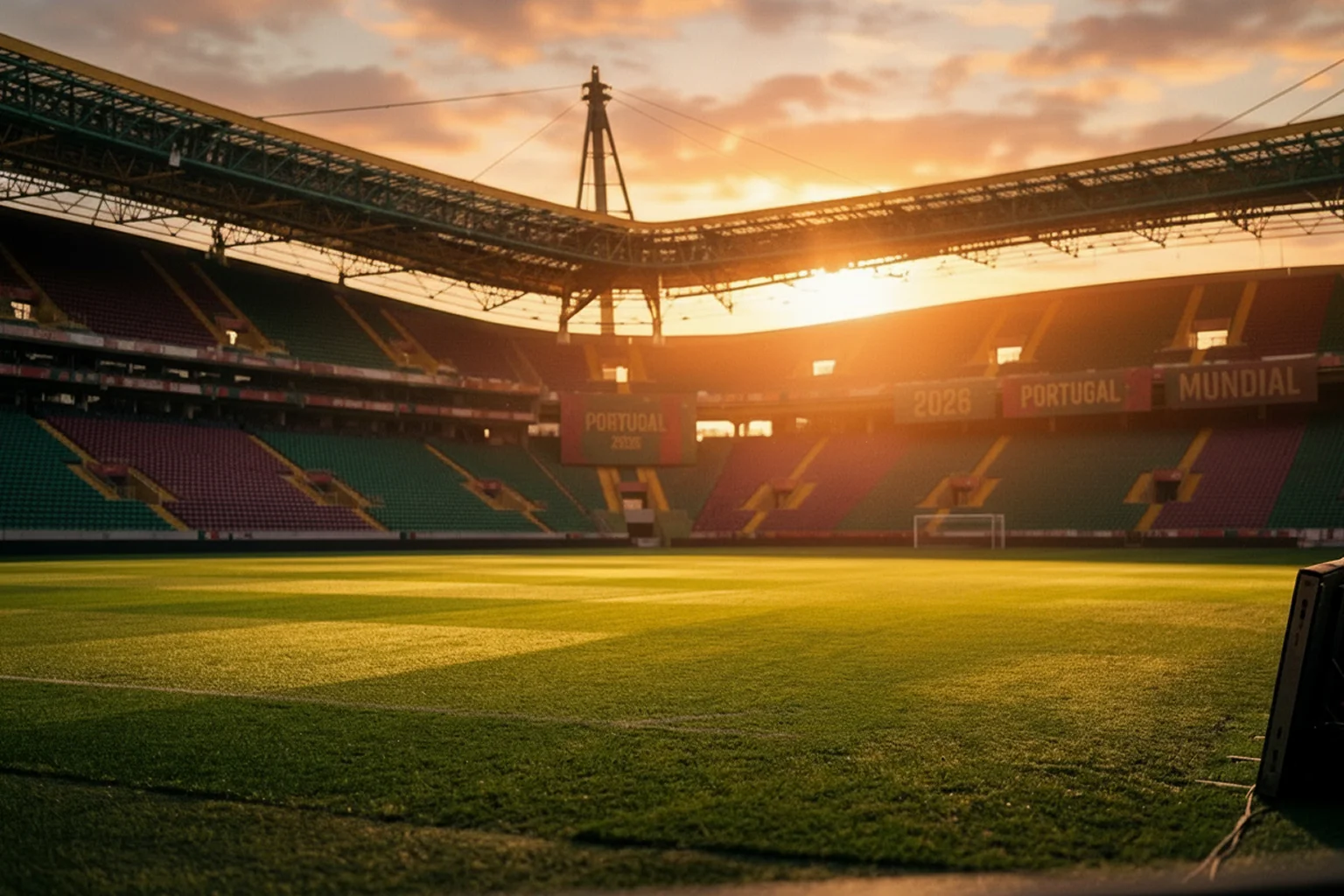
Portugal at the World Cup 2026 — Ronaldo's Last Dance or New Dawn?
Cristiano Ronaldo will be 41 years old when the 2026 World Cup kicks off. That single fact frames every conversation about Portugal at this tournament — and, frankly, it distracts from a more important story. Behind the Ronaldo narrative sits one of the deepest squads in international football, a generation of Portuguese talent that plays across Europe’s elite leagues and has the quality to contend for the trophy regardless of whether a 41-year-old legend features in the starting eleven. Portugal at the World Cup 2026 are drawn into Group K with DR Congo, Uzbekistan, and Colombia, and their campaign will be defined less by the farewell of one man and more by whether the next generation can deliver on the promise they have shown at club level. For Irish punters studying the outright market, Portugal represent one of the more interesting value propositions — a squad with elite depth priced at odds that reflect the market’s uncertainty about their tournament pedigree rather than their actual quality.
Portugal’s Route to the Finals
Portuguese qualifying campaigns have been surprisingly stressful in recent cycles. Despite the embarrassment of riches available to the coach, qualifying has produced anxious moments — narrow wins, unconvincing away performances, and the occasional result that prompts national hand-wringing. The 2026 cycle was no different. Portugal topped their UEFA group but required a run of strong results in the second half of the campaign to secure automatic qualification after a sluggish start.
The early qualifying matches exposed a familiar tension in Portuguese football: the question of how to integrate the senior players with the emerging generation without creating friction. The coaching staff managed this transition more smoothly than their predecessors, gradually shifting the balance of the squad toward younger options while maintaining the experience and leadership that veterans provide. By the final qualifying matches, the starting eleven had a distinctly youthful profile, with senior players used more selectively as impact substitutes and rotation options.
The attacking numbers were exceptional. Portugal scored freely throughout qualifying, with a goals-per-match average that ranked among the highest in Europe. The creativity came from multiple sources — wide attackers, midfield runners, and a striker who established himself as the primary goal threat with a consistency that silenced the debate about who should lead the line. Defensively, Portugal were solid without being impregnable, and the clean sheet record improved as the campaign progressed and the defensive partnerships stabilised. The pattern across qualifying was clear: Portugal controlled matches at home with suffocating possession, scoring two or three goals while conceding rarely. Away from home, they were more pragmatic — tighter defensively, more reliant on transitions and set pieces, and willing to accept draws against the stronger teams in the group. This dual approach is the mark of a well-coached squad that understands the demands of different contexts, and it is exactly the kind of tactical maturity that translates to World Cup success.
Key Players — Generational Wealth
A Portuguese football journalist told me once that the problem with managing Portugal is not finding eleven good players — it is leaving out the twelfth. The squad depth for the 2026 World Cup is genuinely extraordinary. In every position, Portugal have multiple options who would start for most other nations at the tournament. The creative midfielder who orchestrates play from the number ten or number eight position is among the most technically gifted players in world football, capable of producing passes that no one else sees and finishing with a composure that belies his age. His club career at one of Europe’s biggest clubs has been decorated with trophies and individual awards, and the World Cup represents the stage where he can cement his legacy as a generational talent.
The wide options are dazzling. Portugal can deploy speed merchants who terrorise full-backs on the counter-attack, technical dribblers who create chances in tight spaces, or hybrid wingers who combine both attributes. The depth in wide positions means the coaching staff can tailor the attacking approach to each opponent — pace against high defensive lines, creativity against deep blocks, physical presence against aggressive markers. This flexibility is a significant tactical advantage and one that sets Portugal apart from most other squads at the tournament.
The striker position has resolved itself more clearly than many expected. The primary number nine has earned the role through consistent goalscoring at club and international level, and his movement, hold-up play, and aerial threat provide a focal point for the Portuguese attack. Ronaldo, if included in the squad, would serve as the most decorated substitute in World Cup history — a role that carries enormous emotional weight but limited tactical impact. The squad has moved past the dependency on a single ageing star, and the results have been positive. Goals are shared, creativity is distributed, and the team functions as a collective rather than a support act.
The defensive unit features experienced Serie A and Premier League regulars who have been together long enough to develop understanding and communication. The centre-back pairing is strong in the air, comfortable on the ball, and capable of playing in both high and deep defensive lines. The full-backs provide attacking width — the left-back in particular is one of the most effective overlapping players at the tournament, contributing assists and crosses that create goal-scoring opportunities with regularity. The right-back offers a more balanced profile, solid defensively and disciplined in his positioning. The goalkeeper is experienced and reliable, a presence between the posts who makes the routine saves look easy and produces the occasional match-winning moment when called upon. Portugal’s defensive record at recent tournaments has been strong, and the current setup continues that trend with a unit that concedes few goals from open play and is well-drilled at defending set pieces.
Group K — DR Congo, Uzbekistan, Colombia
Three days before the draw, I wrote a piece predicting that Portugal would land a “comfortable-looking group with one genuine danger game.” Group K fits that description exactly. DR Congo and Uzbekistan are beatable. Colombia are not.
Colombia qualified through CONMEBOL with a campaign that included memorable victories and the kind of resilience that South American qualifying demands. Their squad features players from the Premier League, La Liga, and Serie A, and their midfield is among the most creative at the tournament. The attacking play is built around a veteran midfielder whose vision and passing range can unlock any defence, supported by wide players with pace and a striker whose movement creates space for others. Colombia versus Portugal is the Group K headliner — two attacking teams with deep squads and genuine aspirations. I rate this match as one of the most entertaining of the group stage, a fixture where both teams will attack with intent and the goals market should be heavily considered. Colombia are not underdogs in this match; they are legitimate rivals for top spot, and Irish punters looking for a value bet should note that Colombia to beat Portugal is typically available at around 7/2 — generous for a team of their quality.
DR Congo bring the passion and athleticism that Central African football is known for, with a squad that includes players from Ligue 1 and the Belgian league. Their qualification through CAF was hard-earned, and they will arrive with nothing to lose. DR Congo’s best attribute is their physical presence in midfield and their pace in wide areas, both of which could trouble Portugal if the match becomes open. I expect Portugal to win but not without effort — a 2-0 or 2-1 scoreline feels about right.
Uzbekistan are the group’s tournament debutants in practical terms, having qualified through AFC with a squad built predominantly around the domestic Uzbek league. The quality gap against Portugal is substantial, and this should be the fixture where Portugal build goal difference and give minutes to rotation players. Uzbekistan’s defensive organisation will be tested severely, and the over 3.5 goals line in this match is one I would back.
My Group K prediction: Portugal first with seven to nine points, Colombia second with six or seven, DR Congo third, Uzbekistan fourth. The Portugal–Colombia match determines first place and could have significant implications for the knockout bracket seedings.
Portugal’s Odds — Are They Being Overlooked?
Portugal are priced around 12/1 to 16/1 for the outright World Cup, a range that places them alongside Germany and the Netherlands in the second tier of favourites. My view is that Portugal are slightly undervalued at these prices. The squad depth is comparable to France’s. The tactical system is proven at tournament level. The coaching setup has stabilised after a period of transition. And the motivation — for a squad that watched Argentina and Spain win recent tournaments with similar or lesser talent — is powerful.
At 16/1 each-way, Portugal are a bet I would take. The place terms covering a semi-final finish offer a safety net, and I rate Portugal’s probability of reaching the last four as higher than the market implies. Their Euro 2024 campaign, while ending in a quarter-final penalty shootout loss, demonstrated a team that could compete with anyone over 90 minutes. The squad has only improved since, with the younger players accumulating more experience and the tactical system bedding in further.
The group stage markets reflect Portugal’s quality accurately. Portugal to win Group K is around 4/7, which is short but justified given the strength of the squad relative to the opposition. The Colombia match is the market to target — the draw is typically priced around 5/2, and both teams to score is a strong line in a fixture between two attacking sides. Portugal’s total group goals over 5.5 is another market I find attractive, given the Uzbekistan fixture’s potential for a high scoreline.
My value rating for Portugal: 7 out of 10. The squad quality is elite, the draw is manageable, and the price reflects a market that may be sleeping on a team that has all the ingredients for a deep run. The full tournament team ratings put Portugal’s position in context against the entire 48-team field.
Saudade and Glory — 8 out of 10
Portugal earn 8 out of 10, matching the Netherlands and placing them just below the top tier. The rating reflects a squad that could genuinely win the tournament on its best day, balanced against a tournament pedigree that has produced only one major trophy — Euro 2016 — in the modern era. The emotional weight of the Ronaldo farewell, whether it materialises or not, adds a dimension that is impossible to quantify but impossible to ignore.
Tournament ceiling: World Cup winners, validating a generation of talent that deserves a trophy and proving that Portuguese football can produce sustained excellence at the very top of the game. Tournament floor: round of 16 exit, undone by a moment of defensive fragility or a penalty shootout that continues the Portuguese tradition of tournament heartbreak. My expectation is a quarter-final or semi-final appearance, a performance that builds the reputation of the post-Ronaldo generation and establishes Portugal as a team the elite genuinely fear. At 16/1 each-way, I am backing them to get there.