
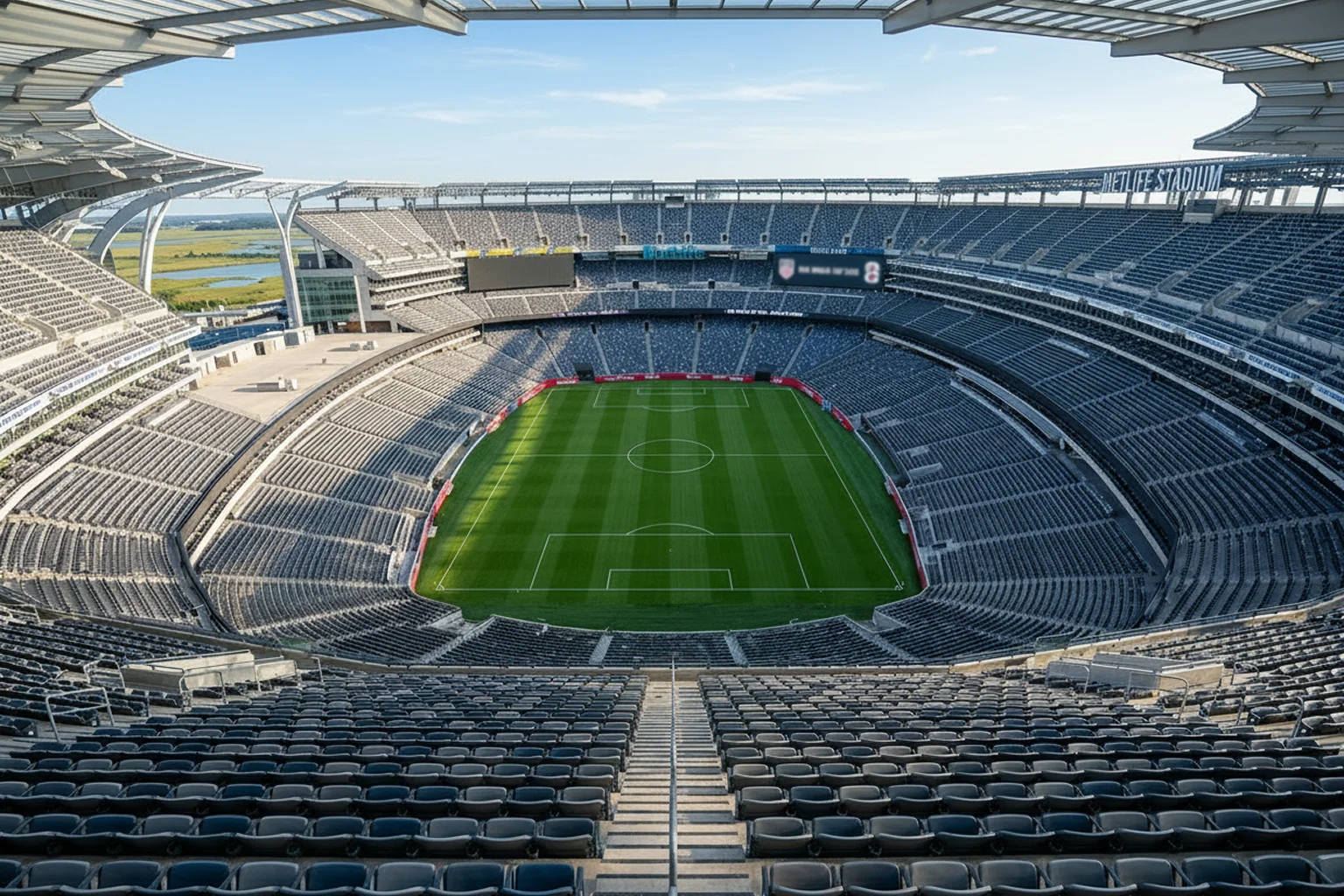
USA at the World Cup 2026 — Home Advantage Under Pressure
Hosting a World Cup changes everything. The crowd, the expectation, the scrutiny, the belief that an entire nation is watching and willing you to succeed — it transforms ordinary players into heroes and good teams into great ones. Or it does the opposite. South Korea in 2002 reached the semi-finals on home soil. South Africa in 2010 went out in the group stage. The historical record on host nation performance is inconsistent enough to make any confident prediction foolish. The USA at the World Cup 2026 carry the weight of 330 million people, a domestic football culture that has grown enormously over the past decade, and a Group D draw against Paraguay, Australia, and Turkey that looks navigable but far from easy. I have been covering international tournament betting for nine years, and the host nation question is always the hardest to price. Here is my attempt.
Automatic Qualification — What It Means
The USA did not need to qualify. As hosts, their place at the 2026 World Cup was guaranteed from the moment the tournament was awarded. This is simultaneously an advantage and a concern. The advantage is obvious: no risk of the qualifying drama that ended Ireland’s hopes in Prague, no accumulated fatigue from competitive matches, no injuries sustained in must-win fixtures. The concern is more subtle but equally real: the USA enter the World Cup without the competitive edge that qualifying provides. They have not played a meaningful competitive match in months, relying instead on friendlies and invitational tournaments that, regardless of the quality of opposition, do not replicate the intensity of a World Cup qualifier with everything on the line.
The coaching staff have tried to compensate by scheduling high-profile friendlies against European and South American opposition, but the gap between a friendly in March and a World Cup match in June is enormous. Players know the difference. The adrenaline, the pressure, the consequence of a mistake — these are the elements that separate tournament football from everything else, and the USA will experience them for the first time in this cycle when the World Cup begins. How quickly they adjust will determine whether home advantage lifts them or the pressure crushes them.
There is a historical precedent that favours the hosts. At the last six World Cups, five of the six host nations progressed from the group stage. The crowd factor is significant — playing in front of passionate, partisan support in familiar stadiums with no travel fatigue provides a tangible edge that the data supports. The USA will play their group matches at venues where the USMNT regularly draws large crowds, and the atmosphere should be electric. For bettors, the question is not whether home advantage exists but how much it is worth — and whether the market has already priced it in.
Key Players — The USMNT’s Golden Generation
American football journalists have been calling this group of players a “golden generation” for the better part of five years, and for once the label is justified. The USMNT squad features more players at elite European clubs than at any point in American soccer history. The days of the USA relying on MLS-based players to compete at a World Cup are over. This squad includes Champions League regulars, Premier League starters, and Bundesliga first-teamers who have proven themselves against the best club competition in the world.
The midfield is the strongest area of the squad. The creative midfielder who operates from the number eight or number ten position is one of the most technically gifted American players ever produced. His ability to receive the ball in tight spaces, turn, and play forward passes that split defences has drawn comparisons to European midfielders of the highest calibre. He drives the team’s attacking play, and his fitness and form heading into the World Cup will be critical to how far the USA progress. Alongside him, the defensive midfielder provides the balance — a disciplined, intelligent player who shields the back four and allows the more creative players to push forward with confidence.
The attacking options have depth and variety. The primary striker has scored consistently at club level in one of Europe’s top five leagues, and his movement and finishing make him a genuine threat in the box. The wide options include players with pace, dribbling ability, and the directness that can trouble any defence. The USA’s attacking play is built on transitions — winning the ball high, playing quickly through the lines, and arriving in the penalty area with numbers. Against Paraguay, Australia, and Turkey, this approach should create opportunities. Whether the finishing matches the chance creation is the variable that will determine the USA’s group stage outcome.
Defensively, the squad has matured. The centre-backs have accumulated significant experience at top European clubs, and the full-backs provide attacking threat without neglecting their defensive duties. The goalkeeper position is settled with a reliable, composed option who has performed well in high-pressure club matches. The defence is the area where the USA have improved most dramatically over the past four years, and the clean sheet record in recent friendlies reflects a defensive structure that is well-organised and difficult to break down.
Group D — Paraguay, Australia, Turkey
The opening match of any World Cup is the most important for the host nation. Win it, and the momentum, the crowd, and the belief carry you forward. Lose it, and the pressure intensifies exponentially. The USA open against Paraguay in a fixture that should be favourable but carries the risk of a slow start against organised, combative opposition.
Paraguay qualified through CONMEBOL and bring the competitive resilience that South American teams are known for. They are well-drilled defensively, physical in midfield, and capable of making life uncomfortable for technically superior opponents. Paraguay will not be intimidated by the crowd or the occasion — they have played in front of hostile atmospheres throughout CONMEBOL qualifying and are accustomed to the pressure. The USA should win this match, but a 1-0 or 2-1 scoreline is more likely than a comfortable margin. I would target the under 2.5 goals line in this fixture.
Australia are the team I rate as most likely to surprise in Group D. The Socceroos have developed a squad with genuine depth, featuring players from the Premier League, La Liga, and the Scottish Premiership alongside a strong core from the A-League. Their style is direct and energetic, their defensive organisation is solid, and their recent World Cup appearances — reaching the round of 16 in 2022 — suggest a team comfortable on the biggest stage. USA versus Australia is the fixture that could determine second place in the group, and I would not dismiss a draw as a likely outcome.
Turkey are the wild card. Turkish football oscillates between brilliance and chaos with very little middle ground. On their day, Turkey can beat anyone — they have the individual talent, the tactical intelligence, and the crowd support (the Turkish diaspora in the USA is significant). On a bad day, they concede soft goals, lose discipline, and implode. Turkey’s presence in Group D adds unpredictability that the other matches lack, and for bettors, that unpredictability creates opportunities in markets where the odds may not fully account for the range of possible outcomes.
My Group D prediction: USA first with seven points, Turkey second with five, Australia third with four, Paraguay fourth. The USA–Australia match is the pivotal fixture, and the draw market in that match offers value at typical prices above 5/2.
The Home Advantage — How Much Is It Worth?
I have studied host nation performance at every World Cup since 1990, and the data supports a meaningful home advantage. Host nations outperform their pre-tournament ranking by an average of two to three positions, their win rate in the group stage is significantly higher than their quality would predict, and the crowd factor in tight matches — where the referee’s decisions and the players’ confidence can be swayed by 80,000 partisan supporters — is real. The USA will benefit from all of these factors.
The specific advantages for the USA go beyond crowd support. They will train at familiar facilities, sleep in familiar beds, and avoid the travel fatigue that other teams accumulate moving between host cities across three time zones. The climate is familiar — American summers are hot, but the USA players train in these conditions year-round. The altitude at certain venues (Mexico City, for instance, though the USA play their group matches in the continental US) is not a factor for them as it is for European opponents. These marginal gains compound across a tournament, and by the knockout stages, the accumulated benefit of home advantage could be significant.
For bettors, the home advantage translates into specific market edges. The USA to score first in their group matches is a strong line — the crowd energy in the opening minutes will drive the team forward, and opponents may struggle to settle. The USA to win both halves is another market where home advantage amplifies the probability beyond what the raw quality differential would suggest.
USA Odds — Overhyped or Genuine Contenders?
The USA are priced around 20/1 to 25/1 for the outright World Cup, a range that reflects the market’s view that they are a good team on home soil but not among the genuine elite. I agree with that assessment. The squad quality, while improved dramatically, does not compare favourably with Argentina, France, Brazil, England, or Spain. The USA can beat any individual team on their day, but winning seven matches across 39 days against increasingly difficult opponents requires a depth and consistency that I have not seen from this squad.
At 25/1 each-way, the USA are worth a speculative punt. The place terms covering a semi-final finish give you a return if the home advantage carries them to the quarter-finals — a realistic possibility given the expanded format and the likelihood of a manageable Round of 32 draw. The group stage markets are where the strongest value lies: USA to win Group D is around 4/6, justified by squad quality and home advantage. USA to score the most goals in Group D is another angle I like, given their attacking quality and the favourable fixture against Paraguay.
My value rating for the USA: 6 out of 10. The home advantage is real and meaningful, but the squad quality ceiling is lower than the market’s pricing at 20/1 suggests. The full Group D analysis breaks down every fixture and market in the group.
Stars and Stripes — 7 out of 10
The USA earn 7 out of 10, a score that accounts for the home advantage and the genuine improvement in squad quality while acknowledging the gap that remains between the USMNT and the traditional elite. Tournament ceiling: semi-finalists, riding a wave of home support and momentum that overcomes the quality deficit against stronger opponents. Tournament floor: group stage exit, overwhelmed by the pressure and exposed by Turkey or Australia in a match they expected to control. My expectation: quarter-finalists, a performance that the country celebrates as progress and that sets the foundation for the next generation of American football.