
Trump, Infantino and the Balogun Red Card — What Actually Happened
 Available in US
This is the column I have been meaning to write since the early days of July, when the World Cup’s biggest off-pitch story broke and the rest of us were still paying attention to the football. The basic facts are not in serious dispute at this stage — Folarin Balogun was sent off against Bosnia in the round of 32 by a VAR intervention, USA’s president phoned FIFA’s Gianni Infantino, FIFA suspended the automatic ban, UEFA said FIFA had "crossed a red line", and the USA went out to Belgium in the next round anyway. But the order in which those facts matter, and the lessons for the 2030 cycle, are worth a proper column.
The Match Incident, in Order
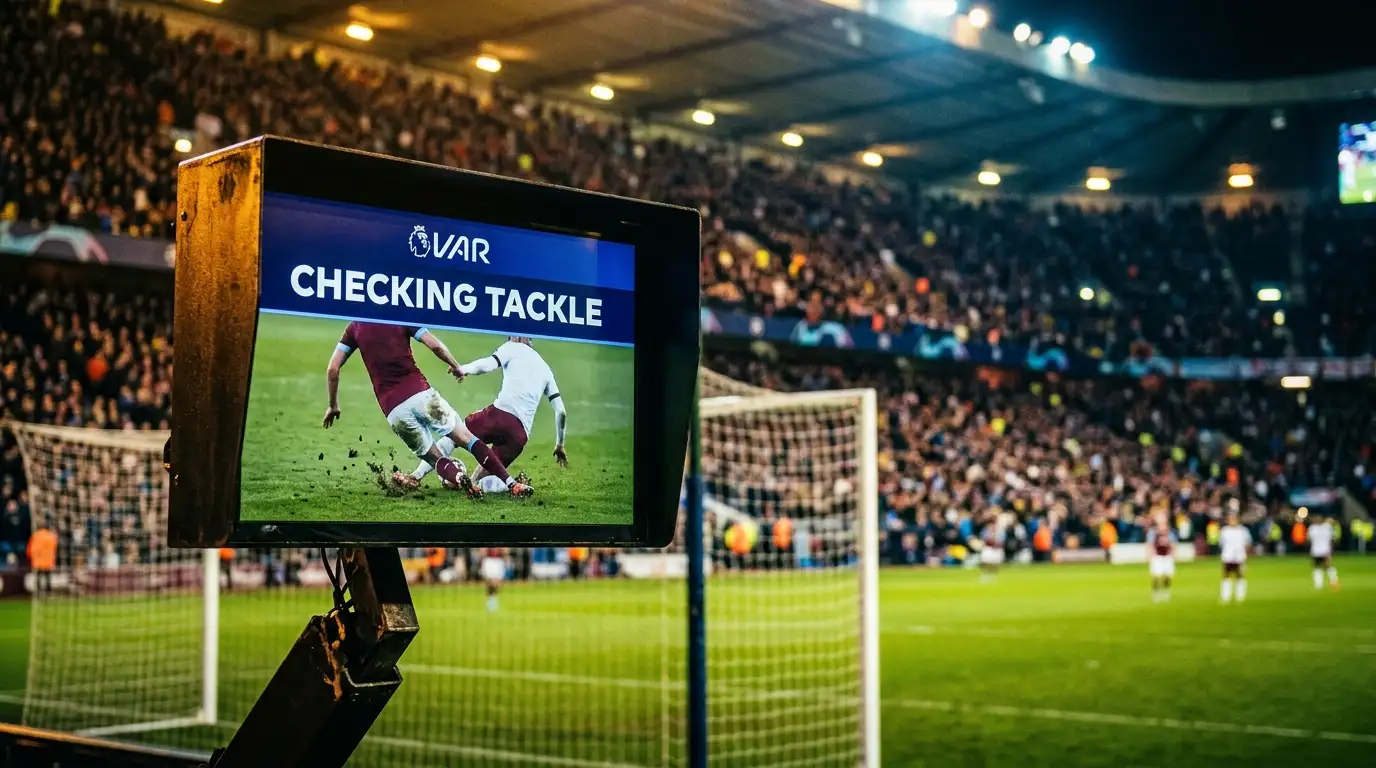
Balogun started for the USMNT in the round-of-32 tie against Bosnia on 5 July. The US were favourites to progress. In the 67th minute, with the game still goalless, Balogun went into a tackle with a Bosnian defender at speed and caught the player on the shin with his studs. The on-field referee played on; the VAR, Alejandro Hernández Hernández, called the referee to the monitor; the on-field referee upgraded to a red card.
The video was clearer than I expected when I saw it in real time. Studs down, follow-through high, contact on the trailing leg. By the letter of the law, that is a red card every day of the week. The bigger question, and the one UEFA and most of European football took issue with, was not the red. It was the next bit.
The Phone Call, the Suspension, the Reaction
Within 24 hours, President Trump phoned FIFA President Gianni Infantino. The content of the call was not officially published. The result of the call, however, was. FIFA’s disciplinary committee confirmed that the automatic one-match suspension that should have followed the red card had been "suspended pending review" — a phrasing that did not appear in any FIFA rule book I have on my shelf. Balogun was free to play the round-of-16 tie against Belgium.
The football world reacted quickly. UEFA, in an official statement the next day, said FIFA had "crossed a red line" and described the decision as "unprecedented, incomprehensible and unjustifiable". The European Club Association echoed the call. Players’ unions raised the issue. The CONCACAF crowd was, predictably, quieter; the United States had not made it out of the group stage at any men’s World Cup since 2002, and a clear path to a quarter-final — even one paved by political intervention — was a prize worth the political embarrassment.
What the Suspension Did and Did Not Do
It is important, when assessing this story, to separate what FIFA did from what they did not. They did not overturn the red card. The red stands in the records to this day. They did not make Balogun retroactively innocent of the foul. He still committed the act.
What they did was set aside the consequence — the one-game ban that rules around the world treat as automatic for any direct red. By FIFA’s own regulations, an automatic ban can be challenged through a formal appeal process, but the process is meant to take days, not hours, and is meant to be decided by a panel. What happened here was effectively an instant stay, decided by political pressure from the host nation’s leader. The mechanism was new. The optics were terrible. The precedent was set.
My reading of the suspension itself: 4/10 on process, 2/10 on optics.
The USA Lost Anyway — But the Precedent Will Not Undo
Whatever else one says about the intervention, it did not work. Belgium beat the United States 4-1 in the round of 16, Balogun played but did not score, and the USMNT went out of the tournament at the same stage they did in 2022. The political momentum that the Trump-Infantino call bought them lasted exactly 90 minutes.
But the precedent has not undone. We now know, definitively, that FIFA’s disciplinary process is responsive to phone calls from political leaders of host nations. We now know, definitively, that automatic one-match bans can be paused without following the formal appeals process. We now know, definitively, that UEFA will publicly call out FIFA on political interference and that the call will be formally noted but not formally answered. None of these lessons is good for the sport.
My reading of the precedent: 2/10 for the integrity of the disciplinary system, 9/10 for the speed at which it will be raised the next time a political football is in play.
What the British-Irish Angle on This Was
For Irish and British viewers the story sat differently. Balogun was born in New York, raised in England, represented England’s youth teams before switching to the USMNT in 2023. He was a Premier League striker. The BBC and the Irish sports pages covered the story through the lens of an Arsenal academy graduate caught up in a FIFA political storm, not through the lens of a US striker.
The other British-Irish relevance was the wider question of political pressure in sport. The Irish FA, the FAI, and the Scottish FA were watching this one closely, because all three are in the same governance web as UEFA, and all three have, at various points, taken issue with FIFA’s recent tilt towards political expediency. The next UEFA-FIFA disagreement of this kind will land in their inbox as well.
My British-Irish angle rating: 7/10 for relevance, 8/10 for the editorial interest.
My Verdict on the Whole Affair
I am going to give this story two ratings, because it deserves them. On the football side: a 4/10. The US going out to Belgium 4-1 was exactly the comeuppance the political intervention deserved; the on-field discipline got the last word. On the governance side: a 3/10 for FIFA. The pre-existing disciplinary system was not followed, the precedent for political intervention in football discipline was reinforced, and the only meaningful public correction came from UEFA — a body that has its own reasons for opposing FIFA’s recent tilt, which makes the criticism easy to dismiss.
The phone call itself, as a piece of presidential sports diplomacy, sits somewhere in the middle. There is no evidence Trump did this for any reason other than wanting the US to do well at a tournament the US is hosting. That is a normal motivation for a host nation’s president. It is not a normal thing for a FIFA president to act on.
For 2030 — when Spain, Portugal and Morocco will host jointly, with three host-nation presidents in play — this is the elephant in the disciplinary room. The next call will come. The question is whether FIFA will answer it.
My overall verdict: 4/10. A story the sport got wrong, and a story the sport will keep paying for until the disciplinary process is rebuilt to be politically uninterruptable. As an Irish punter, I am now less sure than I was in June that the next World Cup’s biggest talking point will be a football one. That is the part that bothers me most.
- Balogun’s VAR red vs Bosnia (5 Jul) had its automatic one-match ban suspended after Trump’s call to Infantino.
- UEFA’s official line: “unprecedented, incomprehensible and unjustifiable” — “crossed a red line.”
- The intervention did not change the result: USA went out 4-1 to Belgium in the R16 anyway.
- The precedent is now set: disciplinary automatic bans are politically responsive in FIFA’s process.
- For 2030 (Spain/Portugal/Morocco) — three host-nation presidents — the next phone call is now expected.
For the wider reads, see my awards verdict on the 2026 prizes, the Spain-as-champions verdict and the closing column for Irish punters.
Facts and statements sourced from UEFA’s official release, ESPN, CNBC, CNN and Al Jazeera coverage of 5–6 July 2026; the record red stands and the suspension is the contested act. 18+. Bet responsibly, set a limit, and when the fun stops, stop.
