
The Complete World Cup 2026 Betting Guide
 Available in US
Three tournaments ago, I placed my first World Cup bet in a Paddy Power shop on Baggot Street. It was a 10/1 punt on Germany to beat Brazil in the 2014 semi-final, and when the scoreboard read 7-1, I thought I had cracked the code. I had not. That overconfidence led me into a string of horrible calls at the 2018 tournament that I still prefer not to discuss in public. But those failures taught me more about World Cup betting than any winning streak ever could, and after covering Euro 2020, Qatar 2022, and Euro 2024, I have developed a framework that I trust enough to share in this World Cup 2026 betting guide.
This tournament is unlike anything we have seen. Forty-eight teams across three countries, 104 matches over 39 days, and a format that fundamentally reshapes how you should think about every market from outright winner to group-stage correct scores. The old playbook does not work here. If you are treating this World Cup like the 32-team version, you are already making your first mistake. The expanded field, the third-place qualification rule, and the sheer volume of fixtures create opportunities that simply did not exist before. They also create traps that will swallow money from anyone who has not done the homework.
I have written this guide for the Irish punter who wants to approach the tournament with discipline, not just enthusiasm. We will cover every major betting market, walk through how I identify value in a 48-team field, look at the Irish regulatory landscape under the new Gambling Regulation Act 2024, and I will share five specific bets I am placing before the opening match at Estadio Azteca on 11 June. This is not a prediction factory. This is a methodology for finding edges in the biggest football tournament ever staged.
Tournament: FIFA World Cup 2026 — 11 June to 19 July, hosted across the United States (11 venues), Mexico (3 venues), and Canada (2 venues). Format: 48 teams in 12 groups of four; top two plus eight best third-placed teams advance to a Round of 32. Total matches: 104. Final: MetLife Stadium, East Rutherford, New Jersey. Opening match: Mexico vs South Africa, Estadio Azteca, Mexico City. Irish time note: IST is UTC+1 during the tournament; most evening kick-offs in US Eastern Time translate to 23:00 or 02:00 IST.
The 48-Team Format — A Punter’s Breakdown
When FIFA confirmed the expansion from 32 to 48 teams, a mate in my local told me it would “water down the whole thing.” He is wrong, but I understand the instinct. More teams sounds like more dead rubbers. In reality, the new format creates more competitive group stages, more permutations for third-place qualification, and a significantly more complex knockout bracket. For anyone betting on this tournament, the format change is not a dilution — it is the single biggest variable you need to understand before you place a euro.
The 48 teams are divided into 12 groups of four. Each team plays three group matches, which means the group stage still follows the traditional round-robin model. The top two from each group advance automatically, giving us 24 guaranteed qualifiers. Then the eight best third-placed teams also progress, making it 32 teams in the knockout rounds. From the Round of 32 onward, it is single-elimination football all the way to the final at MetLife Stadium.
That third-place rule is where the complexity lives. In a 32-team World Cup with eight groups, you knew exactly what a team needed: finish first or second. Now, finishing third is not elimination — it is a grey zone. A third-placed team with four points and a decent goal difference might still advance, while a third-placed team on three points with a negative goal difference probably will not. This uncertainty changes everything about how you bet on group-stage outcomes. The “group winner” market becomes more interesting because the genuine threat of third-place advancement makes dead rubbers rarer. Teams that might have rested players after securing qualification now have incentive to chase goal difference.
Group Stage Rules and Permutations
Every group match awards three points for a win and one for a draw. If teams are level on points at the end of the group stage, the tiebreakers follow a specific hierarchy: goal difference first, then goals scored, then head-to-head record, then fair play points, and finally a drawing of lots. For betting purposes, goal difference as the first tiebreaker matters enormously. It means that heavy favourites — Argentina, France, Brazil — have a tangible incentive to run up the score against weaker opponents. That changes how you approach over/under markets in mismatched fixtures.
Consider Group E: Germany, Curaçao, Côte d’Ivoire, Ecuador. Germany will be expected to demolish Curaçao, and a 5-0 or 6-0 scoreline is not fantasy. If you are looking at the over/under 2.5 goals market in that match, the group-stage incentive structure tells you the over has real structural support. But here is where the 48-team format adds nuance. Germany do not just need to beat Curaçao — they need to beat them convincingly, because their goal difference relative to other group winners could affect their seeding in the Round of 32 bracket. The format makes every goal count, not just every result.
The permutations for eight best third-placed teams are genuinely complex. Across 12 groups, 12 teams will finish third. Only eight advance. FIFA will rank these third-placed teams by points, then goal difference, then goals scored. If you are betting on whether a specific team qualifies from a difficult group — say Scotland in Group C with Brazil and Morocco — the third-place escape route is critical information. Scotland could lose to Brazil, beat Haiti, draw with Morocco, and still advance with four points as one of the best third-placed teams. That scenario would have been impossible in the old format.
Round of 32 and Beyond
The knockout bracket from the Round of 32 to the final follows a fixed structure determined by group finishing positions. Group winners are seeded into one half of the bracket, while runners-up and best third-placed teams fill the other side. The exact bracket paths depend on which third-placed teams qualify, which introduces a layer of unpredictability that did not exist in the 32-team model.
For outright winner bets, this bracket structure is critical. A team that wins Group A might face a third-placed team from Group D in the Round of 32, then the runner-up of Group C in the Round of 16, creating a path that is significantly easier or harder depending on how other groups resolve. I will go deeper on bracket analysis in my full groups and bracket breakdown, but the principle for bettors is clear: do not just evaluate how good a team is in isolation. Evaluate their likely path through the knockout rounds.
There is also a practical consideration for Irish fans. With 104 matches spread across 39 days, the group stage alone features 48 fixtures in the first two weeks. That volume means more opportunities for in-play betting, more accumulators, and more player markets. It also means more variance, more upsets, and more chances for disciplined bettors to find value while casual punters chase losses. The format rewards patience and system, not impulsive flutter.
World Cup Betting Markets Explained
A colleague once told me that the World Cup is the only event where a casual punter and a professional analyst are looking at the same markets but seeing completely different things. He was right. The range of betting markets available for this tournament is staggering, and most people will stick to outright winner or match result without realising that the real value often sits in less popular markets. I am going to walk through every major market category, rate each one for value potential, risk level, and entertainment factor, and tell you where I think the smart money should go.
Outright Winner and Each-Way
The outright winner market is where most World Cup betting begins and, for many casual punters, where it ends. You pick the team you think will lift the trophy on 19 July at MetLife Stadium, and if they do, you collect. Simple in concept, brutally difficult in practice. The 48-team format makes this market harder to crack because there are more knockout rounds, which means more opportunities for upsets. A team that was 4/1 pre-tournament still needs to win seven matches to take the title — that is one more than the old format required.
I rate the outright winner market 7/10 for value, 9/10 for risk, and 10/10 for entertainment. The value is there because bookmakers cannot perfectly price a 48-team tournament with so many variables, but the risk is extreme because even the best team in the world has roughly a 15-20% implied probability of winning seven consecutive knockout matches. Each-way betting softens the blow considerably. Most Irish bookmakers offer each-way terms on the outright winner — typically paying out at 1/4 or 1/5 odds for a team that reaches the semi-finals. If you back a team at 20/1 each-way and they make the last four, the place portion alone returns a healthy profit. For a tournament this unpredictable, each-way is not a consolation prize — it is a legitimate strategy.
Group Winner and Qualification
This is where the 48-team format creates genuine edges. Group winner markets ask you to predict which team finishes top of their group, while qualification markets ask whether a specific team will make it out of the group stage (in any position). The qualification market now includes the third-place escape route, which dramatically changes the odds for teams in difficult groups.
Take Group C: Brazil, Morocco, Haiti, Scotland. Scotland qualifying from this group might look improbable at first glance, but the third-place mechanism means they do not need to finish above Brazil or Morocco — they just need enough points and goal difference to rank among the eight best third-placed teams across all 12 groups. The qualification market for Scotland will be priced with this in mind, but I find that bookmakers still undervalue third-place scenarios because casual bettors think in binary terms: finish top two or go home. I rate group markets 8/10 for value because the pricing inefficiency around third-place permutations is real. Risk sits at 6/10 — lower than outrights because you are predicting group outcomes over three matches rather than seven knockout rounds. Entertainment is 7/10 because group-stage drama is intense but lacks the sudden-death theatre of knockout football.
Top Scorer, Player Specials
Player markets are my favourite playground at a World Cup. The top scorer market — the Golden Boot — is one where history gives us useful patterns. Winners tend to come from teams that go deep in the tournament and face at least one weak group-stage opponent. The 48-team format reinforces this pattern because every group contains at least one significantly weaker team, which means prolific strikers from top nations will have at least one fixture designed for a hat-trick.
Beyond the Golden Boot, player specials include anytime goalscorer in specific matches, assists leader, and tournament MVP (Golden Ball). These markets are often less efficiently priced than team markets because bookmakers focus their sharpest modelling on match and outright outcomes. I rate player markets 8/10 for value, 7/10 for risk, and 9/10 for entertainment. The risk is moderate because injuries and rotation can derail even the best-positioned players, but the value is genuine if you do the homework on group-stage matchups and likely minutes played.
Match Betting, Correct Score, Both Teams to Score
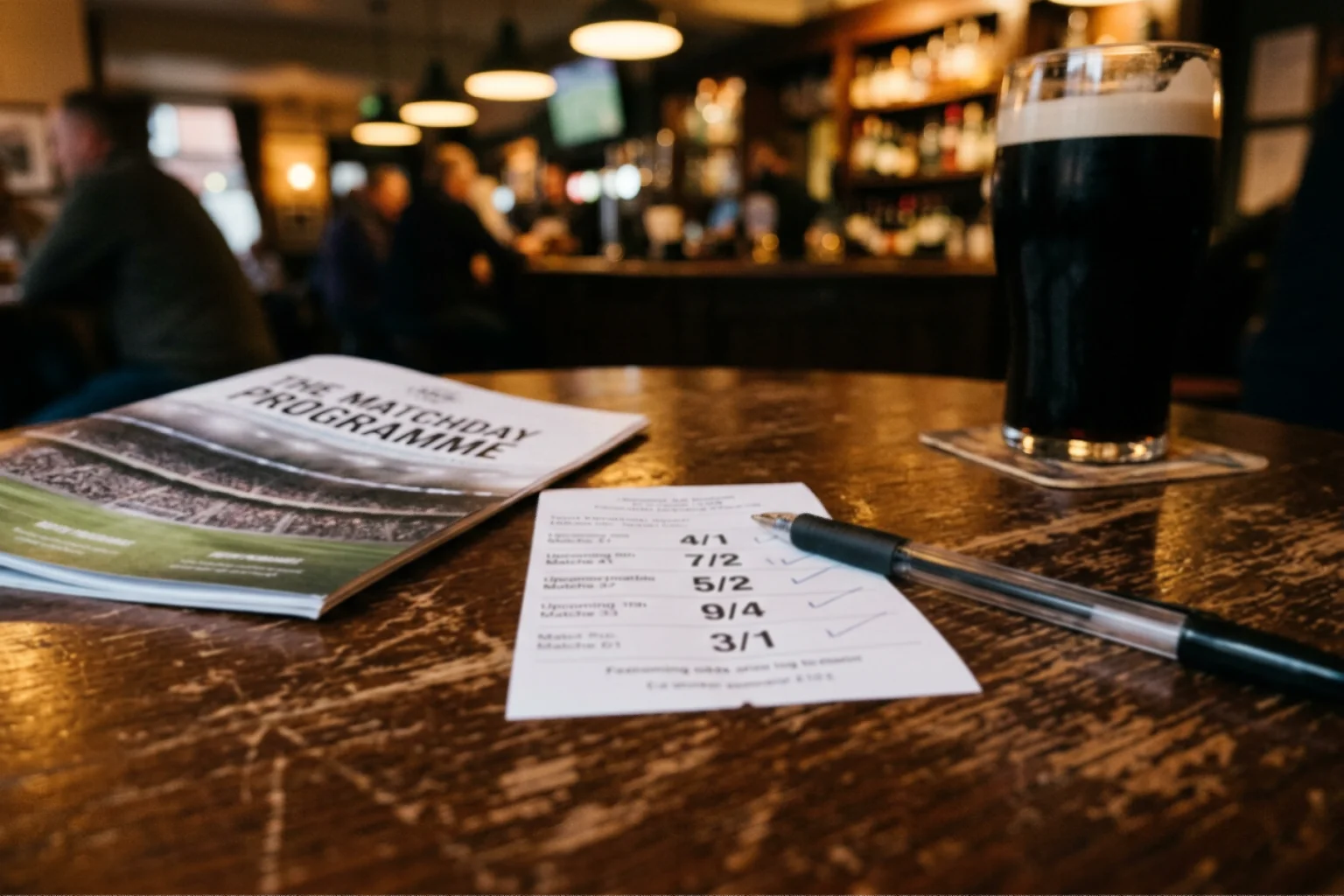
Match-level markets are the bread and butter of daily World Cup betting. The standard match result (1X2) asks you to predict a home win, draw, or away win for each fixture. At a World Cup played across three countries, the concept of “home advantage” gets complicated — Mexico and the USA genuinely have it for their group matches, while every other team is effectively playing away. This creates a slight pricing anomaly for host-nation fixtures that sharp bettors can exploit.
Correct score betting is high-risk, high-reward. Predicting the exact final score of a football match is notoriously difficult, which is why bookmakers offer generous odds — a correct score of 2-1 typically prices around 6/1 to 8/1 depending on the teams. I use correct score markets sparingly, usually in fixtures where I have a strong read on the likely pattern of play. Group-stage matches between a clear favourite and a minnow are the best candidates because the range of plausible scorelines narrows considerably.
Both Teams to Score (BTTS) is an increasingly popular market that I find genuinely useful for accumulator legs. In the 48-team format, mismatches are more common, which means BTTS “No” in fixtures like Germany vs Curaçao or Argentina vs Jordan carries less risk than in a balanced group-stage clash. Conversely, BTTS “Yes” in evenly matched fixtures — Netherlands vs Japan, Spain vs Uruguay — reflects the reality that quality attacking nations rarely fail to score. I rate match-level markets 6/10 for value (heavily traded, tightly priced), 5/10 for risk (three outcomes per match is manageable), and 8/10 for entertainment because every group-stage day gives you six to eight matches to consider.
How I Find Value — My Approach to World Cup Odds
In 2022, I backed Morocco at 150/1 to reach the semi-finals. It was not luck. I had identified a specific set of conditions — a defensively disciplined team, a favourable Round of 16 draw against Spain, and a squad full of players competing at the highest level in European leagues — that the market was underpricing. Morocco reaching the semi-finals was improbable, but not 150/1 improbable. That gap between actual probability and bookmaker probability is what I call the value window, and finding it consistently is the only way to be profitable at tournament betting over time.
My approach to finding value starts with building my own probability model, which sounds more sophisticated than it is. I assign each team a power rating based on three factors: squad depth (how many first-choice players compete in the top five European leagues), recent tournament form (results at the last two major tournaments), and group-stage draw difficulty. I then convert those ratings into implied probabilities and compare them against the bookmaker odds. When my model says a team has a 12% chance of winning the tournament but the bookmaker is offering odds that imply only a 5% chance, that is value.
The critical discipline is separating what you want to happen from what the numbers suggest. I want Scotland to go deep at this World Cup because it would make for a brilliant summer of sport in Ireland and across the Celtic nations. But my model does not care about Celtic brotherhood. It says Scotland’s squad depth rates below Morocco and well below Brazil, their recent tournament form includes a winless Euro 2024 group stage, and Group C is objectively difficult. The numbers put Scotland’s probability of reaching the quarter-finals around 8-10%. If the bookmakers are offering odds that imply 6%, there is marginal value. If they are offering odds that imply 15%, I am staying away because the market is already overpricing Scottish sentiment.
Another pillar of my approach is timing. World Cup odds move significantly between the draw announcement and the opening match. The biggest inefficiencies appear in the 48-72 hours after the draw, when bookmakers are adjusting prices across 48 teams simultaneously and casual money floods in on popular narratives. If you can identify value during that window and lock in odds before the market corrects, you gain an edge that compounds across multiple bets. I placed my Morocco semi-final bet the morning after the 2022 draw. By the time the group stage started, the odds had shortened from 150/1 to 80/1. That timing advantage represented nearly double the potential return on the same bet.
Bankroll management is the final element. I allocate a fixed tournament budget — typically 2% of my annual betting bankroll — and divide it across pre-tournament bets (40%), group-stage in-play bets (35%), and knockout-stage bets (25%). This structure prevents the common mistake of blowing the entire budget on outright bets before a ball is kicked. The World Cup is a marathon, not a sprint, and the best value often emerges during the tournament as the market reacts to unexpected results.
The 48-team format amplifies every element of this approach. More teams mean more data points for power ratings. More group permutations mean more pricing inefficiencies. More matches mean more opportunities for in-play value. And the sheer novelty of the format — no previous World Cup has used this structure — means that bookmaker models are less refined than they would be for a familiar format. This is, statistically, the best World Cup for value betting in decades. The question is whether you have the discipline to exploit it systematically rather than emotionally.
I keep a spreadsheet of every pre-tournament bet I have placed across the last three major tournaments. My strike rate on outright markets is around 15%, which sounds low until you consider that the average odds on those bets were 18/1. In accumulator markets, my strike rate is closer to 22% on three-leg accas. These are not spectacular numbers, but they represent consistent profitability over a meaningful sample. The system works. Trusting it is the hard part.
Betting on the World Cup from Ireland
Last summer I sat in a pub in Galway watching Euro 2024 with a group of lads who had placed their bets through four different bookmakers — two apps, one website, and one who still walks into the shop on Shop Street every Saturday morning. Ireland has one of the deepest betting cultures in Europe, and the World Cup amplifies everything. The shops get busier, the accumulators get longer, and the WhatsApp group chat becomes a non-stop stream of tips that range from insightful to delusional. But for all that cultural comfort with a punt, many Irish bettors do not pay enough attention to the mechanics of where and how they place their bets. The platform you choose and the regulatory environment you operate in can affect your returns just as much as the bets themselves.
Best Irish Bookmakers for the World Cup
The Irish market is dominated by a handful of operators that most of you already know. Paddy Power is the largest by market share and offers the broadest range of World Cup specials — from outright winner to obscure player props. Their app is the most polished in the Irish market, and their in-play interface handles high-volume tournament betting well. The odds quality on outrights is competitive, though I find their group-stage match pricing tends to be slightly tighter than competitors, which means less margin for value bettors.
BoyleSports is the most authentically Irish operator in the market and has invested heavily in football markets over the past three years. Their World Cup pricing is generally comparable to Paddy Power on outrights and slightly more generous on accumulator returns. If you are building accas, BoyleSports’ acca insurance and boost features are worth considering, though the new regulatory framework has changed how these promotions work.
Betfair operates both a traditional sportsbook and a betting exchange, and the exchange is where sharp bettors should pay attention. The exchange model means you are betting against other punters rather than against the bookmaker, which eliminates the house margin and often produces better odds — particularly on popular outright markets where liquidity is high. During the 2022 World Cup, I found that Betfair Exchange consistently offered 5-15% better effective odds on outright winner bets compared to traditional sportsbook pricing. The trade-off is a commission on winnings, typically around 5%, but even after commission, the exchange often represents the best available price.
I use all three for different purposes. Paddy Power for specials and player markets where the range is broadest. BoyleSports for accumulators where the promotion structure adds value. Betfair Exchange for outrights and large single bets where the exchange pricing delivers the best return. Having accounts across multiple operators is not hedging — it is optimising. The same bet can pay 10-20% more depending on which platform you place it through, and over the course of a 39-day tournament, those marginal gains compound into meaningful differences in your final return.
Quick Regulatory Snapshot for Punters
The Gambling Regulation Act 2024 is the most significant change to Irish gambling law in decades, and it directly affects how you bet on this World Cup. The Gambling Regulatory Authority of Ireland (GRAI) began accepting applications for remote betting licences in February 2026, with B2C licence issuance scheduled from 1 July — right in the middle of the tournament. The practical impact for punters is limited in the short term, but the advertising and promotional restrictions are already in force.
Television and radio gambling advertising is now banned between 05:30 and 21:00. Digital advertising operates on an opt-in model, which means you will see fewer unsolicited betting promotions in your social media feeds. Most significantly, bookmakers are prohibited from offering inducements — free bets, deposit bonuses, and enhanced odds promotions — as tools for acquiring new customers. This does not mean all promotions disappear, but the era of “bet ten get fifty free” is effectively over in the Irish market. Existing customer loyalty programmes and odds boosts still operate, but the regulatory intent is clear: gambling operators cannot use promotional offers to attract new punters.
Credit card payments for betting are also banned under the new framework. If you have been funding your account with a credit card, you will need to switch to debit card or bank transfer before the tournament begins. This is a consumer protection measure that I support — borrowing money to bet on football is never a sound strategy, and the regulation removes a temptation that had no business being available in the first place. For a comprehensive look at how these changes affect your choice of operator, I have put together a detailed bookmaker comparison for the World Cup.
Early Value Picks — My 5 Bets Before Kick-Off

I make it a rule to place my pre-tournament bets at least four weeks before the opening match. By that point, the draw has settled, the initial odds corrections have happened, and the market has found a rough equilibrium. But the final round of friendlies has not yet taken place, which means injury news and late squad changes have not been fully priced in. This window — after the market stabilises but before the final information arrives — is where I find the most consistent value. Here are the five bets I am placing for the 2026 World Cup, with my reasoning for each.
My first bet targets the outright winner market. I am backing France each-way at a price that implies roughly a 10-12% chance of lifting the trophy. My model puts their probability closer to 16-18%, which represents a significant value gap. France have the deepest squad in the tournament, a manager who has navigated three consecutive major tournament semi-finals, and a group-stage draw (Senegal, Iraq, Norway) that should allow them to progress without burning energy. The each-way component means I collect if they reach the semi-finals, which my model puts at around 35-40% probability. This is my anchor bet for the tournament — the one I am most confident represents genuine value.
The second bet is a group-stage qualification play. I am backing a mid-tier team to qualify from a group where the bookmakers have priced them as marginal — a team with the squad quality to accumulate four points across three matches but drawn alongside two stronger sides. The third-place mechanism makes this the most underpriced market category in the 48-team format, and I find at least two or three qualification bets per tournament that pay off at odds of 5/2 or better. The key is identifying teams with defensive discipline and the ability to grind out draws against superior opposition, then checking whether the bookmaker odds reflect the third-place escape route adequately.
My third bet is in the top scorer market. I am targeting a forward who plays for one of the top four favourites, whose group draw includes at least one significantly weaker opponent, and whose national team is likely to reach the quarter-finals at minimum. The Golden Boot is a volume game — the winner typically needs five or six goals, and you cannot score five goals if you are eliminated after three group matches. I want my top scorer pick playing seven matches, not three. The specific player I am backing will be someone whose odds are longer than the market leader but whose goal-scoring opportunity profile (minutes played, expected group-stage matchups, penalty-taking duties) is comparable.
The fourth bet is an accumulator. I am building a three-leg acca combining group winners from three groups where I believe the favourite is being slightly underpriced. A three-leg group-winner acca at cumulative odds of around 7/1 to 10/1 is my sweet spot — high enough to be interesting, short enough to hit with reasonable frequency. I specifically avoid groups with two roughly equal favourites (Group F with Netherlands and Japan, for example) and target groups with one clear top team and a meaningful gap to the rest (Group J with Argentina is a strong candidate).
My fifth bet is a speculative play on a team to reach the semi-finals at long odds. This is the Morocco 2022 play — a team whose odds imply a low probability of going deep but whose actual tournament profile suggests they are underrated. I look for defensive solidity, a favourable bracket path through the knockout rounds, and the kind of squad chemistry that tends to produce upset runs. The 48-team bracket makes these paths more complex but also more rewarding when you identify them correctly, because the market has fewer data points to work from in pricing knockout pathways for the expanded format.
Across these five bets, my total pre-tournament outlay represents about 40% of my tournament budget, with the remaining 60% reserved for group-stage and knockout bets that I will identify once results start coming in. The critical point is that each bet targets a different market with a different risk profile. I am not putting five bets on the same outcome from different angles — I am diversifying across outrights, group markets, player markets, and accumulators to capture value from different pricing inefficiencies. If all five lose, my remaining budget is intact for in-play opportunities. If two or three hit, the tournament pays for itself many times over.
Your World Cup Betting Toolkit Is Ready
Nine years of covering international tournament betting have taught me one thing above all else: the punters who profit are not the ones with the best gut instincts. They are the ones with a system they trust, a budget they respect, and the patience to wait for value instead of forcing bets. The 2026 World Cup is the largest and most complex football tournament in history, and that complexity is your ally if you approach it with the right framework. Forty-eight teams, 104 matches, and a brand-new format mean more opportunities for mispriced odds than any World Cup in memory.
The World Cup 2026 betting guide I have laid out here covers the architecture — the format, the markets, the value methodology, the Irish context, and the specific plays I am making. But the real work happens match by match once the tournament kicks off. The group stage will produce surprises that reshuffle the knockout bracket, injuries that collapse pre-tournament favourites, and results that create in-play value you cannot predict today. Stay disciplined, revisit your assumptions when the data changes, and remember that the best bet you make at this World Cup might be one you place on matchday 10, not matchday one.
Gambling involves risk. Bet only what you can afford to lose. If gambling stops being enjoyable, stop. For support, contact the HSE National Drug and Alcohol Helpline at 1800 459 459 or visit Gamblers Anonymous Ireland.
What is the best bet for the 2026 World Cup?
The best single bet depends on your risk tolerance. For most Irish punters, an each-way outright winner bet on one of the top four favourites offers the strongest combination of value and protection. The each-way component pays out if your team reaches the semi-finals, which hedges against the inherent unpredictability of seven knockout matches. I prefer each-way bets on teams priced between 7/1 and 20/1, where the place terms deliver meaningful returns even if the team falls short of the final.
Can I use fractional and decimal odds on Irish bookmakers?
All major Irish bookmakers — Paddy Power, BoyleSports, Betfair — allow you to switch between fractional and decimal odds in your account settings. Fractional odds (5/1, 11/4) are the traditional format in Ireland and the UK, while decimal odds (6.00, 3.75) are standard on most European platforms. Both represent the same underlying probability; the difference is purely presentational. I use fractional because it is what I grew up with, but decimal is arguably easier for calculating accumulator returns.
What new rules apply to World Cup betting in Ireland?
The Gambling Regulation Act 2024 introduced several changes that affect World Cup betting. Bookmakers can no longer offer inducements such as free bets or deposit bonuses to attract new customers. Television and radio gambling advertising is banned between 05:30 and 21:00. Credit card payments for betting are prohibited. The Gambling Regulatory Authority of Ireland (GRAI) is now the active regulator, with remote betting licences being issued from mid-2026. These changes do not restrict what you can bet on, but they change how operators market to you and how you fund your account.
When should I place my World Cup bets?
The optimal timing depends on the market. For outright winner and each-way bets, I recommend placing your bets four to six weeks before the opening match, after the draw has settled but before final squad announcements introduce new variables. Group-stage bets are best placed one to two weeks before the tournament, when the market has absorbed pre-tournament form data. In-play and match-specific bets should be placed during the tournament itself, as the best value emerges from results that shift market sentiment.
